September 29, 2026
What's Actually Happening Under Your Beard (And Why It Matters)
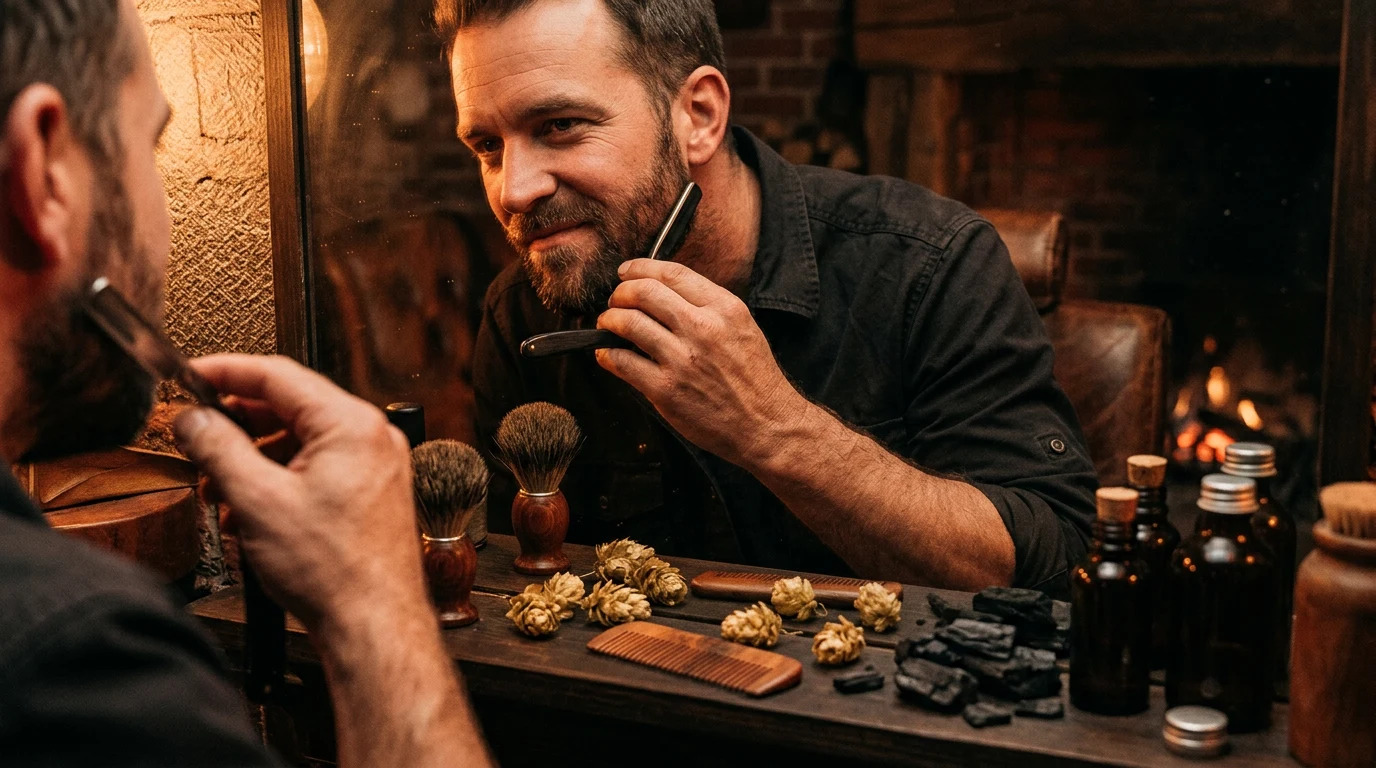
Your beard isn't the problem. The skin underneath is. That hidden layer of face is trapped beneath hair, starved of airflow, coated in sebum and dead cells, and quietly causing every issue you've blamed on the beard itself. The itch, the flakes, the weird smell by end of day, the breakouts you can feel but can't see: they all start beneath the surface.
Cyrus figured this out the hard way. You can't tend a fire without clearing the ash. You can't tend a beard without tending the skin it grows from. Everything else is just styling.
What Makes Under-Beard Skin Different From the Rest of Your Face?
The skin under your beard lives in a different climate than your cheeks or forehead. Hair changes the environment completely.
It is occluded. Each hair acts like a tiny curtain, blocking airflow and slowing down the natural shedding of dead skin cells. It is warmer. Hair traps heat against the face, which means more sweat and more sebum production. It is harder to reach. Most men wash the hair and call it clean, never realizing the skin underneath still has yesterday's buildup. It exfoliates less. Shaving used to scrape off dead skin daily. Once the beard grows, that mechanical exfoliation disappears, and flakes can accumulate fast.
That combination, warm, damp, crowded, and neglected, is why the skin under a beard behaves so differently from the skin on the rest of your face. Treating it the same way is the first mistake.
Why Does Skin Under a Beard Get So Dry and Flaky?
Beard hair is a moisture thief. It wicks sebum and any product you apply away from the skin and toward the tips, where it does your face no good. Meanwhile, washing too often strips the little oil that remains, and most men never replace it because they think beard products are for the beard, not the skin.
Signs your under-beard skin is too dry:
- White flakes in the hair or on your shirt, especially after combing.
- A tight or pulling sensation when you move your jaw.
- Itch that gets worse in cold or dry weather.
- Skin that looks ashy or dull when you part the hair.
The fix is not more washing. The fix is adding oil directly to the skin, not just the hair, and doing it while the skin is slightly damp so it can actually absorb.
What Causes Beard Itch If It's Not the Hair?
Itch is almost always a skin complaint wearing a beard costume. The hair might feel prickly, but the real signal is coming from the skin underneath.
Dehydration is the most common cause. When the skin dries out, it gets irritated, and irritation reads as itch. Follicle irritation is next. Each hair follicle is a tiny opening in the skin, and when debris or bacteria collect there, the area gets inflamed. Trapped dead skin cells build up because the beard blocks natural shedding, creating a layer of grit that sits against the face all day. Product buildup makes it worse. Heavy balms and waxes that sit on top of the hair can slide down to the skin and clog the follicles.
If your beard itches, do not scratch harder. Reach the skin instead. A few drops of lightweight oil worked into the roots will calm the itch faster than any amount of surface grooming.
Can You Get Acne Under Your Beard?
Yes, and it is more common than most men admit. The warm, moist environment under a beard is basically a greenhouse for the kind of bacteria that cause breakouts. The hair makes it harder to notice early, so by the time you feel it, it has already been brewing for a while.
Breakout triggers specific to bearded skin:
- Clogged follicles. Balm, wax, dirt, and dead skin can block the pore opening and trap bacteria inside.
- Bacterial growth. Sweat and sebum feed the microbes that live on your skin naturally. Under a beard, they multiply faster.
- Warm, moist environment. Heat and humidity under the hair make it easier for bacteria to thrive.
- Friction from touching. Your hands transfer oil and bacteria to your beard and face all day long.
The answer is not to stop using products. It is to use products that absorb and rinse clean, and to wash often enough that buildup never gets comfortable.
What's That Smell and Where Is It Coming From?
That end-of-day beard smell is not the hair. It is the skin and everything that has collected on it. Bacteria feed on sebum and sweat, and the process produces odor. Food particles get trapped in the hair and sit against the skin. Inadequate rinsing leaves yesterday's product and grime in place.
The smell is basically a report card. If your beard smells sour or musty by late afternoon, your cleansing routine is not reaching the skin. A proper wash twice a week, plus daily rinsing and oiling, keeps the microbiome balanced and the odor quiet.
Cyrus would say it plainly: if you can smell your own beard, the fire needs more tending and less pretending.
How Do You Actually Care for Skin You Can't See?
You care for it by touch, not by sight. The goal is to get product and water to the roots, not just the tips.
- Wet the beard thoroughly. Water has to reach the skin, not just the surface hair. Use your fingertips to part the hair and let water run through.
- Apply cleanser at the roots. Whether you use a solid bar or a liquid wash, work it into the skin with the pads of your fingers, not just the hair.
- Rinse completely. Leftover product feeds buildup. Take the extra thirty seconds to rinse until the water runs clean.
- Pat damp, not dry. You want the skin slightly moist when oil goes on, not bone dry.
- Apply oil to the skin first. Warm a few drops in your palms, press them against the skin under the beard, then pull the remaining oil through the hair.
- Comb to distribute. A wide-tooth comb spreads the oil and lifts any remaining dead skin so it can flake away naturally.
Surface-only care fails because it treats the decoration and ignores the foundation. Get to the roots and the rest follows.
What Products Work Best for Under-Beard Skin?
The skin under a beard needs lightweight, absorbable, non-clogging support. Heavy products feel nourishing but often sit on top of the hair and never reach where the problem lives.
Lightweight oils absorb into the skin instead of coating it. Look for sunflower, jojoba, or grapeseed as a base. These are close to the skin's natural sebum and unlikely to clog follicles. Gentle washes clean without stripping. A solid shampoo bar or mild cleanser removes buildup without destroying the moisture barrier. Avoid daily use of harsh surfactants. Why heavy balms stay on top. Balms are useful for hold and shape, but their wax content can accumulate at the roots if you overapply. Use balm on the hair, oil on the skin.
If you only buy one thing, buy an oil that is light enough to reach the skin. Everything else is optional until your beard proves otherwise.
How Often Should You Focus on the Skin vs. the Hair?
Every single time you wash or oil. The skin-first approach means asking, did this actually reach my skin, before you ask whether your beard looks good.
On wash days, focus on the roots. On oil days, press the oil to the skin first. On comb days, lift the hair so the skin can breathe. On skip days, at least rinse with warm water so sweat and sebum do not sit against your face.
Your beard will look better as a side effect. That is the whole point. Healthy skin grows better hair, less itch, fewer flakes, less odor, and a beard that behaves the way you want it to.
Ready to start at the root?
Most beard routines treat the hair and hope the skin follows. The HAFO method does the opposite. If you want a simple, skin-first plan that walks you through the wash, oil, and comb rhythm, grab the 7 day starter plan. It is built for men who are tired of guessing why their beard misbehaves.
When you are ready for products that actually reach the skin, the HAFO shop has a botanical beard oil and solid wash bars that clean without stripping. Start with the skin. The beard will take care of itself.