July 14, 2026
Dry, Itchy, Tangled Beard: What To Do First
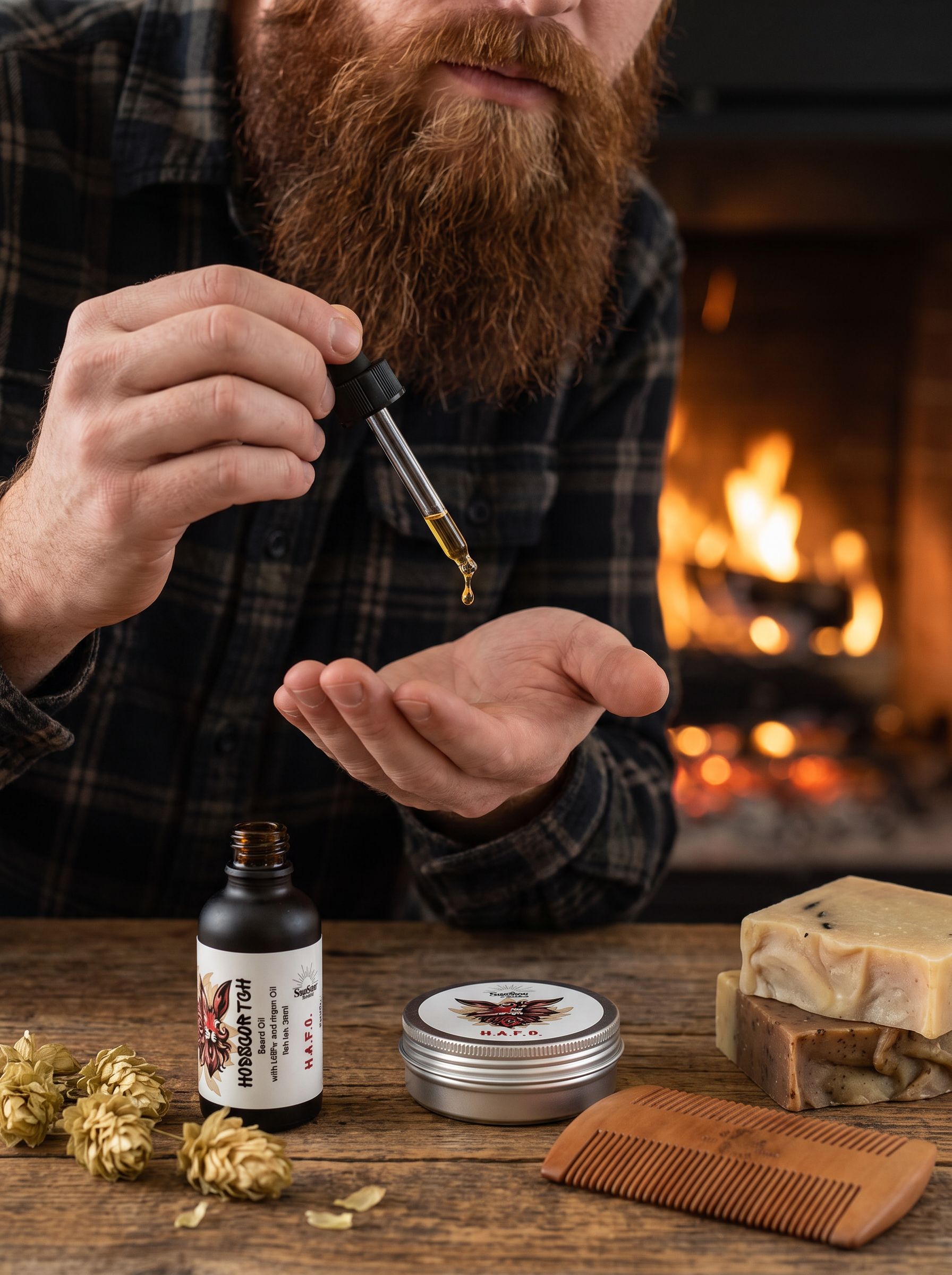
Dry, itchy, tangled beards usually come from dryness, buildup, or fragrance irritation. Start with a 72 hour reset: gentle wash day 1, light rinse-out conditioner day 2, add a few drops of oil on damp skin day 3. Track itch and tangles daily to spot the cause.
Why does my beard get dry and tangled in the first place?
Beard hair is coarser and drier than the hair on your head, so it loses moisture faster and snags more easily. Hard water, harsh soap, cold dry air, and hot showers all strip the little bit of natural oil your beard makes on its own. Skip conditioning for a few days and the cuticle roughens up, which is what causes those tiny knots you feel when you run your fingers through.
Over-washing is just as common a culprit as under-washing. Stripping your beard every day with a regular shampoo pulls out the lipids that keep hair flexible. Once that barrier is gone, every strand rubs against its neighbor and tangles form faster than you can comb them out.
Is beard itch always dryness, or could it be irritation?
Not always. Beard itch usually falls into one of three buckets, and each one needs a different fix.
- Dryness itch: tight, flaky skin, dull hair, worse right after washing or in cold weather.
- Buildup itch: waxy or coated feel, itch shows up a day or two after using a heavy balm or not rinsing fully.
- Fragrance or irritation itch: redness, warmth, or stinging localized to the jaw and neck, often starts within hours of trying a new scented product.
If you are not sure which one you have, start with dryness first since it is the most common and the easiest to test for. Wash gently, condition lightly, and watch what happens over the next three days.
What is the fastest routine reset for the next 72 hours?
A short reset tells you more in three days than weeks of guessing. Here is a simple day by day plan.
- Day 1: wash once with a gentle, low-lather cleanser. Skip leave-ins unless combing is painful, then use one drop of oil on your fingertips to ease the comb through.
- Day 2: wash again if needed, then apply a light conditioner and rinse it out fully. Pat dry, do not rub.
- Day 3: wash, condition, then work in just a few drops of beard oil while the beard is still slightly damp.
Check in after each day. If the itch fades by day 2, dryness was likely the cause. If it flares up right after you add oil or balm on day 3, that points toward buildup or a fragrance reaction instead. This same order, wash, condition, oil, is the backbone of a good daily routine too, and we break it down step by step in our 5 minute beard ritual post.
Should you comb, brush, or leave it alone when it is snagging?
When your beard is actively snagging, stop pulling a brush through it. Bristle brushes are great for distributing oil once hair is smooth, but on tangled, dry hair they just rip through knots and cause breakage. Switch to a wide tooth comb and work from the ends up toward the jaw, never top down.
Always comb on damp hair, never bone dry. A little conditioner or a drop of oil on your fingertips first will let the comb glide instead of catch. If a knot will not release after two gentle passes, leave it and try again after your next wash rather than forcing it.
How can you add moisture without feeling oily?
The trick is quantity, not product. A few drops of oil worked into your palms first, then pressed into the beard and massaged down to the skin, moisturizes without leaving a slick shine. Most people over-apply because they pour oil straight onto the beard instead of warming it in their hands.
Focus half your effort on the skin underneath, not just the visible hair. Dry, itchy skin under the beard is often the real source of the problem, and hair alone can look fine while the skin stays flaky. If you want a full comparison of oils, balms, and how much to use for your beard length, our products page breaks down the lineup.
When should you stop and consider fragrance sensitivity?
If redness, warmth, or stinging shows up soon after switching to a new scented balm or oil, stop using it and give your skin a few days to calm down before testing anything else. If you notice swelling, blistering, or a rash that spreads, stop and seek medical advice.
Fragrance is genuinely common as an irritant. One review estimates fragrance allergy affects about 0.7 percent to 2.6 percent of the general population, while 5 percent to 11 percent of patch tested dermatitis patients react to fragrance mixes, according to a 2020 review. Separately, dermatology sources report that fragrance is the single most common cause of cosmetic allergic contact dermatitis, with sensitization in about 1 percent to 2 percent of the general population and 8 percent to 15 percent of contact dermatitis patients, per Dermatology Times.
Those two figures come from different sources and cover slightly different populations, but together they point the same direction: fragrance reactions are not rare. If your itch pattern matches irritation more than dryness or buildup, switch to a fragrance free or lightly scented product and see if it clears up. We go deeper into which oils are more likely to cause reactions and how to patch test in our fragrance and essential oils post.
A quick way to track what is working
Keep it simple. Write down three things each day of your reset: what you used, how the itch felt, and how the tangles felt when you combed. Patterns show up fast once you have even three days of notes side by side.
- Itch eased steadily each day: dryness, keep going with the light routine.
- Itch got worse after adding product: buildup or too much oil, cut back the amount.
- Itch or redness spiked right after a new scent: irritation, remove that product and patch test before trying again.
Beards do not need a complicated routine to bounce back. Most dry, itchy, tangled beards respond to less product used more consistently, not more product used occasionally. Start with the 72 hour reset, watch how your skin and hair respond, and adjust from there instead of guessing at a fix.
If you want a simple starting point before you buy anything, grab our free guide for a rundown of the basics. It walks through wash frequency, how much oil is actually enough, and what to look for on a label if you think fragrance might be part of the problem.