August 4, 2026
Natural Ingredients Men Actually Care About (And Why)
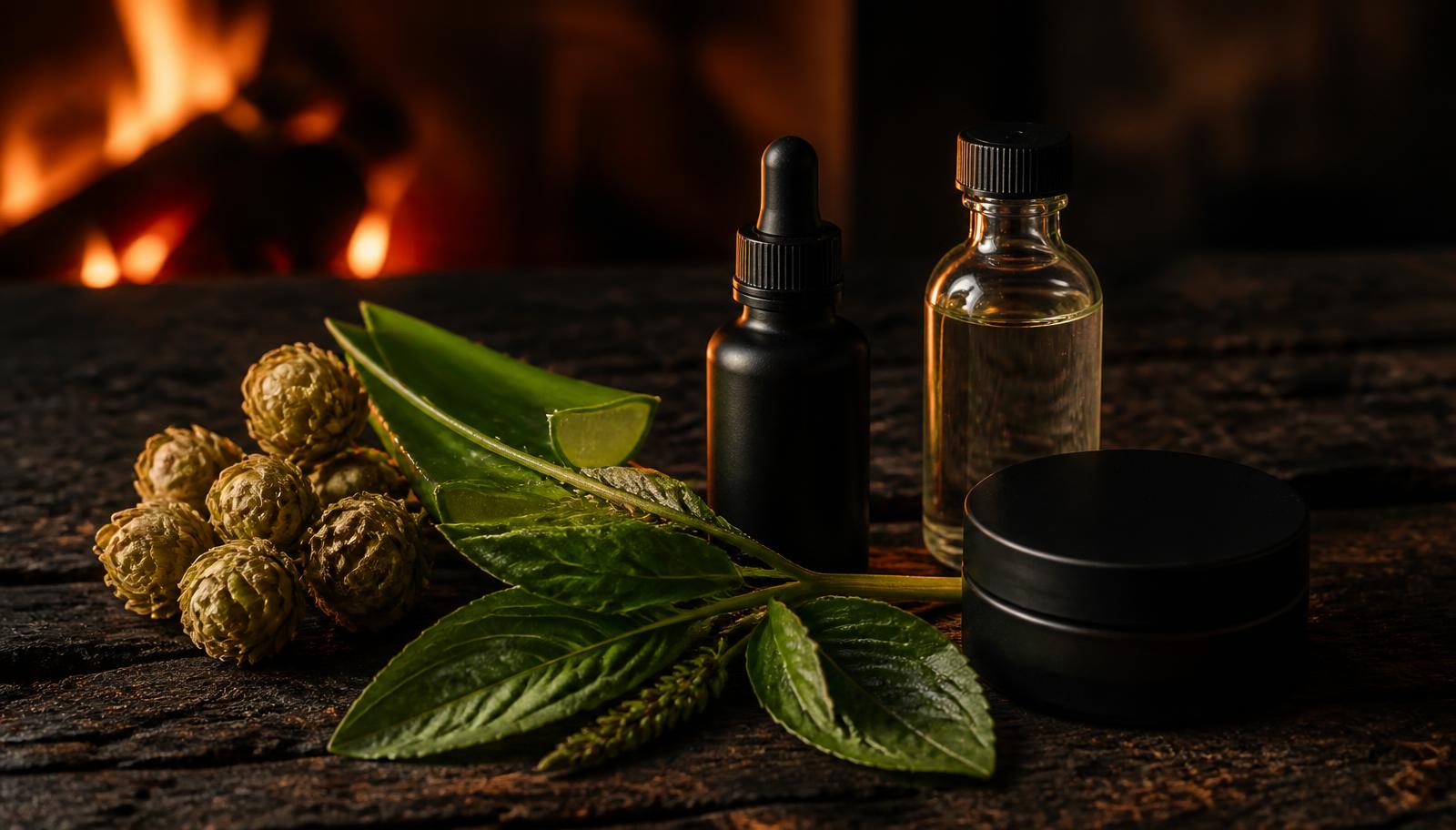
The ingredients that actually solve men's skin problems are not engineered in a lab. They are plants: hops, aloe, witch hazel, and plantain, all of which have been calming irritated skin for centuries. Hops soothe and condition, aloe hydrates, witch hazel tightens and cleans without stripping, and plantain quiets the redness and itch that come with beard growth. Learn those four and you can read almost any grooming label without a chemistry degree.
We are not here to tell you synthetics are evil. Plenty of them work. We are here because the four plants above do the specific jobs beard skin needs, they do them gently, and they show up near the top of an ingredient list when a brand actually means it.
Why Is Hops Showing Up in Men's Grooming Products?
Hops are not just for beer. The cone is packed with resins and flavonoids, and it has a long history in topical use for calming skin and conditioning hair. In beard care, a hop infusion brings two things: a soothing effect on the skin under the beard, and a scent profile that is earthy and green instead of the sharp synthetic cologne note most men's products default to.
That is the honest pitch. Hops are not a miracle. They are a well behaved botanical that plays nicely with carrier oils, does not sting freshly washed skin, and smells like something you would actually want on your face all day. For us it is also the whole point of the brand, which is why every HAFO product starts with a hop infusion instead of adding it at the end for the label.
What Makes Aloe More Than Just Sunburn Relief?
Most men only meet aloe after a bad day at the lake. It deserves better. Aloe is roughly 99 percent water, but the useful part is what rides along with it: polysaccharides that hold moisture at the surface of the skin and help it stay there instead of evaporating in ten minutes.
For beard skin that matters because the hair blocks your natural oils from spreading evenly. You end up with dry, tight skin under a beard that looks perfectly healthy from the outside. Aloe is a lightweight way to put water back without adding grease, which is why it belongs in a wash or a bar more than in a heavy balm.
Is Witch Hazel Actually Good for Your Skin?
Yes, with one caveat: alcohol content. Witch hazel is an astringent, which means it tightens the skin surface and cuts excess oil. That is genuinely useful after a shave or on a face that gets shiny by noon. It also helps calm the small red bumps that follow a close shave.
The caveat is that a lot of drugstore witch hazel is distilled with a high percentage of alcohol, and that version can dry you out fast. Alcohol free witch hazel, or witch hazel used in a formula alongside oils and aloe, gives you the tightening without the stripping. If your skin feels squeaky and tight five minutes after using something, the alcohol won.
What Is Plantain and Why Don't More Brands Use It?
Plantain here means the broadleaf weed growing in your yard, not the banana. It is one of the oldest folk remedies for stings, scrapes, and angry skin, and it earns the reputation: it is genuinely soothing on irritation and it is about as gentle as a botanical gets.
More brands do not use it for a boring reason. It has no marketing shine. Nobody is going to feature a lawn weed on a black and gold label, and it costs time to infuse properly rather than buying a ready made active. That is precisely why we like it. It is the ingredient that shows up when the goal was making the product work, not making the box look expensive.
Why Do These Ingredients Work Better Together?
Because they cover each other's gaps. Aloe adds water. Oils and butters seal that water in. Witch hazel keeps the surface clean and tight so nothing sits and clogs. Hops and plantain calm the inflammation that causes the itch in the first place. Run any one of them alone and you fix a quarter of the problem.
That combination is also why the order you apply things matters more than the shelf full of bottles. Wash, then hydrate, then seal. If you want the full sequence, we walk through it in The 5 Minute Beard Ritual, and the oil versus balm decision is covered in Beard Oil vs Beard Balm.
How Do You Read an Ingredient List Without a Chemistry Degree?
You do not need to know every Latin name. You need four habits:
- Read the first five ingredients. Lists run in order of quantity. If the botanical you are paying for sits below the fragrance, you are buying a rumor.
- Find the carrier oil. Jojoba, grapeseed, and argan are the workhorses. If the base is a cheap filler oil or mostly water with thickeners, the rest of the label does not matter much.
- Check where fragrance sits. Skin safe fragrance oils and essential oils are fine in small amounts near the end of the list. High up the list means the product is a scent with skincare attached.
- Be suspicious of long silent lists. Twenty ingredients you cannot pronounce is not automatically bad, but a brand that will not explain any of them usually has a reason.
If you have reactive skin, this gets more important, not less. We go deeper on label reading for sensitive skin in Beard Care for Sensitive Skin.
What Does Hop-Infused Care Feel Like in Real Life?
Honestly, it feels like nothing dramatic on day one. Skin that is a little less tight after a wash. A beard that combs through instead of catching. Around day five or six, you notice you stopped scratching your jaw during meetings. That is the whole promise, and anyone selling you more than that is selling you a story.
If you want to test it without committing to a shelf full of product, start with the 7 day starter plan and use what you already own. When you are ready to build the kit around ingredients you can actually name, the full HAFO lineup is hop infused from the first step.