September 1, 2026
Sunflower Oil: The Unsung Hero of Men's Grooming
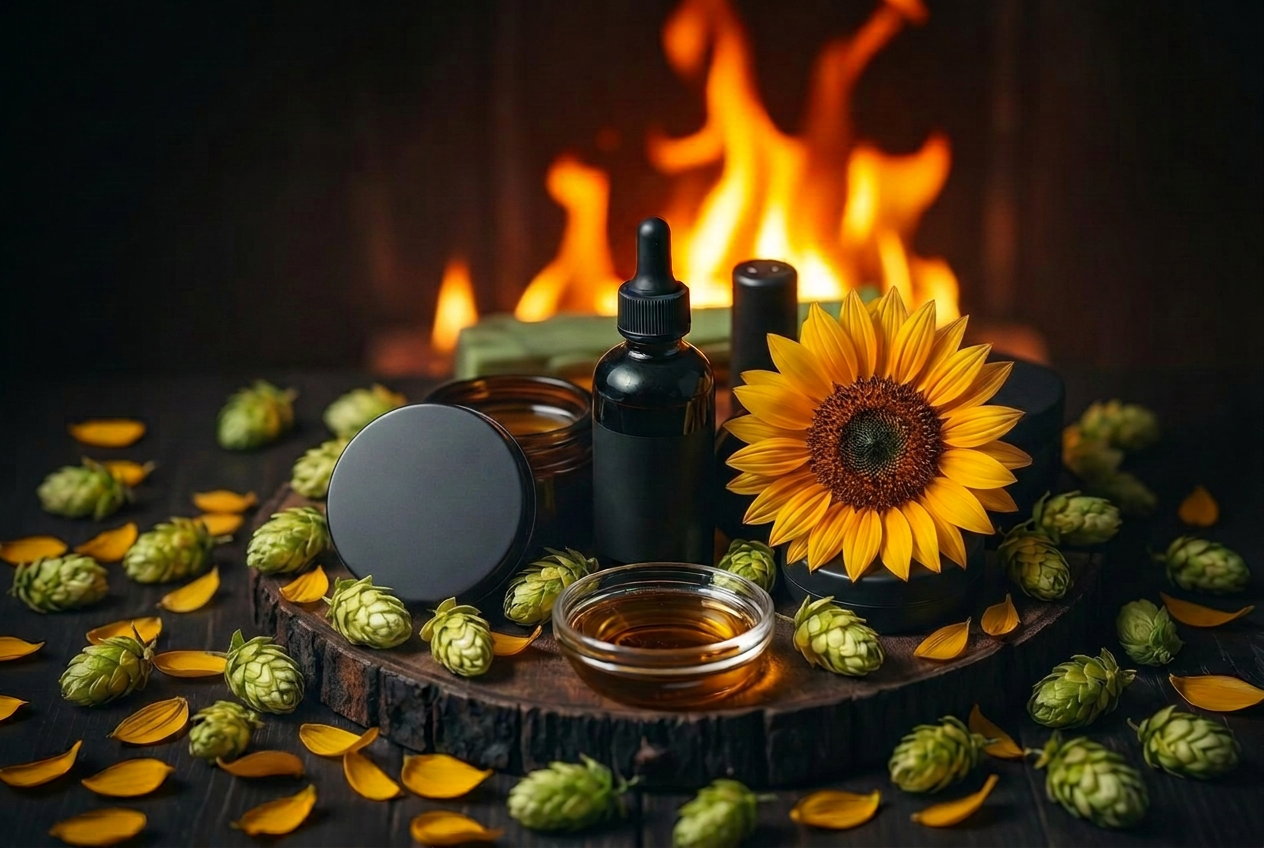
Sunflower oil doesn't have a marketing team. It's not exotic, it's not trendy, and nobody's building a brand story around it. But while you're chasing high-priced argan and overhyped coconut, sunflower oil is quietly outperforming them both. It absorbs faster, moisturizes deeper, and leaves your skin and beard better off without the greasy aftermath.
Why Does Sunflower Oil Work So Well on Skin and Hair?
Three reasons, none of them hype.
First, linoleic acid. Sunflower oil is loaded with it, and linoleic acid is the fatty acid your skin barrier is literally built from. Skin that's short on it gets dry, flaky, and reactive. Topping it up is basic maintenance, not luxury.
Second, vitamin E. Sunflower oil is one of the richest natural sources. Vitamin E is an antioxidant, which means it helps your skin deal with the daily grind of sun, wind, and whatever else your face runs into.
Third, the essential fatty acids support the barrier itself. A healthy barrier keeps moisture in and irritants out. That's the whole game. Most grooming problems, from beard itch to post-shave burn, trace back to a barrier that's been stripped and left to fend for itself.
How Does Sunflower Oil Compare to Other Carrier Oils?
Here's the honest lineup:
- Sunflower vs. argan. Argan is good oil with a great publicist. Sunflower absorbs at a similar rate, carries more linoleic acid, and costs a fraction of the price. You're mostly paying for the story.
- Sunflower vs. jojoba. Jojoba is technically a wax ester and mimics skin's own sebum well. Sunflower absorbs faster and moisturizes deeper. Both are solid. Jojoba just costs more.
- Sunflower vs. coconut. Coconut oil sits on top of skin and scores high on the comedogenic scale, meaning it clogs pores for a lot of men. Sunflower does the opposite: fast absorption, near zero clog risk.
- Sunflower vs. grapeseed. The closest competitor. Grapeseed is light and fast too, but sunflower wins on shelf stability and vitamin E content.
On absorption rate, comedogenic rating, price point, and shelf stability, sunflower oil doesn't lose a single category that matters. It just never got a rebrand.
Will Sunflower Oil Clog Pores or Feel Greasy?
No, and here's why. Oils get rated on a comedogenic scale from 0 to 5. Zero means it won't clog pores, five means proceed with caution. Coconut oil sits at 4. Sunflower oil sits at 0.
That zero is why sunflower oil works for acne-prone skin where heavier oils start a fight. High linoleic acid content actually correlates with calmer, clearer skin. The greasy feeling people blame on oil usually comes from thick, slow-absorbing oils sitting on the surface. Sunflower sinks in within minutes and gets to work instead of shining.
What Does Sunflower Oil Do for Beards Specifically?
A beard is only as healthy as the skin under it, and that's where sunflower oil earns its keep.
It softens coarse beard hair without coating it in wax. It adds shine without the wet, greasy look that screams overproducted. Most importantly, it reaches the skin beneath the beard, the part every itch, flake, and patch of beardruff comes from. When that skin is moisturized and calm, beardruff stops being a recurring problem and becomes a thing you used to deal with.
Why Don't More Brands Talk About Sunflower Oil?
Because it's boring, and boring doesn't sell at a markup.
Argan sounds like an adventure. Coconut sounds like a beach. Sunflower sounds like something already in your kitchen, and a brand can't charge you triple for something you associate with a salad. So the industry learned to lead with exotic ingredients and bury the effective ones.
There's also a cost transparency problem. Sunflower oil is affordable and widely available, which makes it hard to pretend it's rare. Brands that build their margin on mystique have no use for an ingredient whose price you can look up. We take the opposite view: if it works this well at this price, putting it at the top of the label is the honest move. It's the same standard we applied in Natural Ingredients Men Actually Care About.
What Should You Look for in Sunflower Oil Products?
Not all sunflower oil is the same bottle. Before you buy, check:
- High-oleic vs. high-linoleic. High-linoleic is the classic skin-barrier pick. High-oleic is more stable and slightly richer. Both are excellent. What you want to avoid is a label that just says vegetable oil blend.
- Cold-pressed. Heat and solvent extraction strip out the vitamin E and fatty acids that make the oil worth using. Cold-pressed keeps the good parts intact.
- Position on the label. Ingredients are listed by quantity. If sunflower oil is below the fragrance, it's a garnish, not a base. It should sit at or near the top.
How Does HAFO Use Sunflower Oil?
It's the foundation, not a footnote. Every HAFO oil and balm is built on a hops-infused sunflower oil base. We chose it because it does everything this article says: absorbs fast, moisturizes deep, won't clog pores, and carries the hop infusion without fighting it. The sunflower oil does the skin work. The hops handle the calming and the clean, earthy scent.
That's the whole trick. No exotic fairy dust, just the right carrier oil doing real work at the top of the label where it belongs.
If you want to feel what a proper oil base does, start with the 7 day starter plan. When you're ready for the full setup, the oil, balm, and bars are all built on that same hops-infused sunflower base.