August 25, 2026
Hops in Grooming: Why This Brewery Staple Belongs in Your Beard
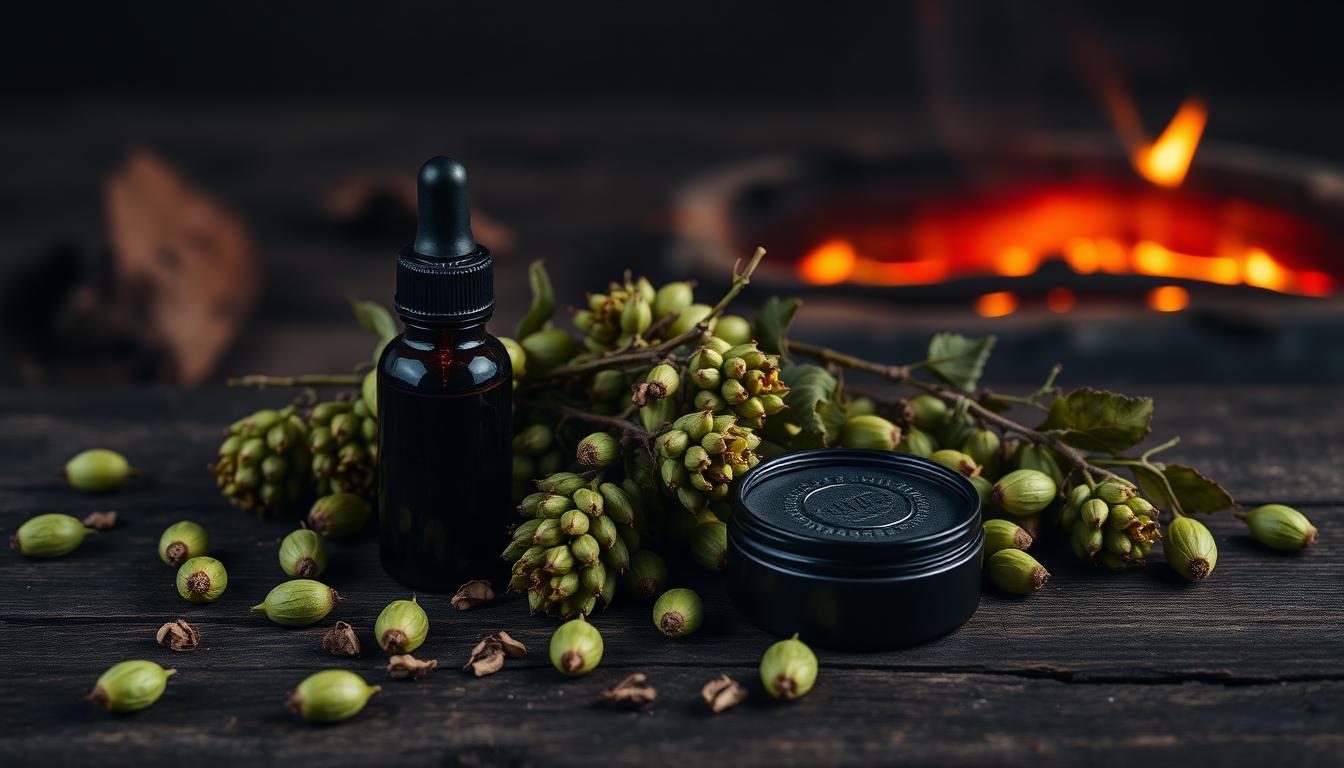
Hops belong in your beard for the same reason they belong in beer: they solve problems other ingredients can't. The lupulin inside hop flowers calms inflammation, fights bacteria, and soothes irritated skin, all without stripping your face or leaving chemical residue. What brewers figured out centuries ago, men's grooming is finally catching up to.
What Are Hops and Why Do They Work on Skin?
Hops are the cone shaped flowers of the hop plant, and brewers prize them for what's inside: lupulin, a yellow powder packed with resins and oils. For the non-brewers, here is the translation. Alpha acids give beer its bitterness and happen to be antibacterial. Beta acids add aroma and bring their own antimicrobial behavior. The essential oils carry the scent and a mild soothing quality.
On skin, that package does three useful things at once. It calms angry patches, it keeps surface bacteria in check, and it conditions without grease. You do not need to know the chemistry to benefit from it. You just need to know the plant was doing real work long before anyone put it on a grooming label.
How Do Hops Calm Beard Itch and Irritation?
Beard itch usually comes from inflammation: dry skin under the beard, friction from coarse hair, or buildup clogging the surface. Hop compounds are naturally anti-inflammatory, which means they turn down the irritation at the source instead of covering it up.
That is the key difference from numbing agents. Menthol and heavy synthetic coolants make your face stop reporting the problem for an hour. Hops work on the problem itself, so the itch fades because the irritation did, not because your nerve endings got shouted over.
What Makes Hops Antimicrobial Without Being Harsh?
The same alpha acids that keep beer from spoiling in the barrel make life hard for bacteria on your face. The difference is delivery. An alcohol based aftershave wipes out everything on contact, good bacteria included, and leaves the skin tight and stripped. Your skin responds by overproducing oil, and you end up greasier and itchier than when you started.
Hops carried in oil work slower and gentler. They tilt the balance against the troublemakers without scorching the whole neighborhood. Your skin's natural bacterial balance stays intact, which is what keeps it calm in the long run.
Why Are Hops Showing Up in Premium Grooming Products?
Part of it is the craft movement. Men who care what goes into their beer started caring what goes onto their face, and botanical ingredients with a real story beat a lab code printed in six point type. Hops come with centuries of documented use and a scent that reads earthy and green instead of synthetic cologne.
But trend alone does not keep an ingredient on a label. Hops stuck around because they work. We covered the wider cast of botanicals worth knowing in Natural Ingredients Men Actually Care About, and hops sit at the top of that list for a reason. It is the whole point of this brand: every HAFO product starts with a hop infusion instead of adding it at the end for the marketing.
How Is Hops Extract Different From Hops-Infused Oil?
Extraction method changes what you get. A concentrated extract or CO2 extract pulls specific compounds out of the plant in a lab, strong and isolated. An infusion steeps whole hop flowers in a carrier oil over time, so the oil picks up a broad, balanced share of the resins and aromatics along with the conditioning properties of the carrier itself.
Neither is automatically better, but they behave differently on a label. An extract usually shows up as its own line item near the bottom, a small dose in a larger formula. A hop infusion means the carrier oil itself is the hop delivery system, which is why it shows up near the top of the list where the real quantity lives. If hops are what you are paying for, check where they sit. Below the fragrance means you are buying a rumor.
What Does Hops-Infused Beard Care Feel Like?
No drama on day one, and that is the honest answer. Here is what the first couple of weeks actually look like:
- Scent. Earthy, green, faintly herbal. It reads like a walk past a hop yard, not a cologne counter, and it fades to quiet within the hour.
- Skin feel. Less tight after washing, no sting, no grease film. Fingertips come away clean.
- Week one. The beard combs through instead of catching. The midday jaw scratching starts dropping off.
- Week two and beyond. Calmer skin under the beard becomes the default instead of a good day. You notice it most when you skip a day.
Anyone promising you a transformation by Thursday is selling a story. This is slow, steady maintenance, which is exactly what skin responds to.
Is Hops Right for Every Skin Type?
Almost, with the usual common sense. Oily and combination skin benefits from the bacterial balance without the stripping. Dry and reactive skin benefits most from the calming side, since hops infuse into the same carrier oils that do the moisturizing.
The cautions are the standard ones. If you have a known hop allergy, obviously skip it. For everyone else, patch test on the inside of your forearm for a day before your face gets involved, especially if your skin reacts to new products in general. We go deeper on that process in Beard Care for Sensitive Skin.
If you want to feel the difference without a commitment, start with the 7 day starter plan and pay attention to what calm skin actually feels like. When you are ready, the full HAFO lineup is hop infused from the first step, because we were never going to make it any other way.